For generations, corporate operational strategy treated the physical environment as a constant. Offices, warehouses, and factories were designed around stable baseline climates, and energy consumption was viewed purely through the lens of utility costs. Today, that operational certainty has evaporated.
Modern organizations face the convergence of two powerful, escalating forces: accelerating extreme heat hazards that threaten worker safety and labor capacity, and expanding carbon taxes that penalize emissions-heavy facility management. To survive and thrive in this new operating environment, businesses must fundamentally adapt their physical infrastructure, shift work scheduling, and decarbonize their operational footprints.
The Operational Impact of Extreme Heat Hazards
Rising global temperatures and frequent, prolonged heatwaves are no longer just environmental concerns; they are critical workplace safety liabilities that directly impair productivity and human capital.
- Labor Capacity and Health Risks: As wet-bulb temperatures and ambient heat rise, physical exertion outdoors or in non-climate-controlled facilities (such as warehouses, manufacturing plants, and construction sites) becomes genuinely hazardous. Heat exhaustion, cognitive fatigue, and compliance violations cost industries billions in lost productivity annually.
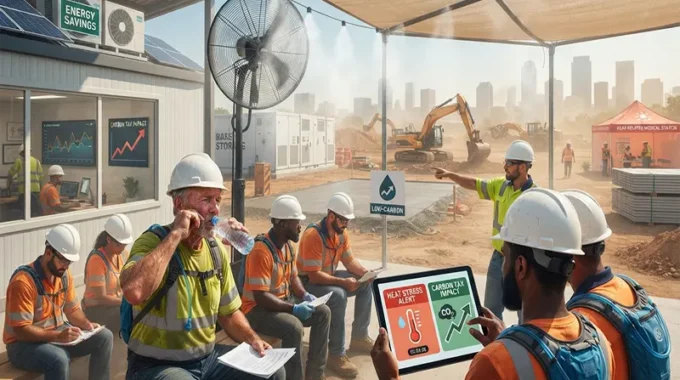
- Mandatory Operational Adaptations: Organizations are forced to re-engineer how work gets done. EHS (Environmental Health and Safety) managers are enforcing strict heat stress protocols, mandatory hydration breaks, and real-time thermal monitoring.
- Schedule Re-Engineering: Many outdoor and industrial operations are shifting working hours entirely, moving heavy labor into the cooler early morning or late evening hours to protect workers from peak afternoon temperatures.
The Financial and Operational Pressures of Carbon Taxes
Simultaneously, tightening regulatory frameworks—including expanding carbon pricing mechanisms, emissions reporting mandates, and carbon border adjustments—are fundamentally reshaping corporate cost structures.
- Penalizing Energy-Intensive Facilities: Traditional, fossil-fuel-reliant heating, ventilation, and air conditioning (HVAC) systems, paired with heavy manufacturing emissions, are coming under direct financial fire as carbon taxes raise the cost of energy consumption.
- The Cost of Inaction: Facilities that fail to modernize their energy profiles face compounding tax burdens that erode operating margins.
- The Operational Response: In response, facility managers are conducting rigorous audits of Scope 1 and Scope 2 emissions, upgrading to high-efficiency building management systems, electrifying corporate fleets, and integrating real-time carbon tracking into daily operations.
Convergence: Redesigning the Future Workplace
Forward-thinking organizations are discovering that extreme heat resilience and carbon reduction cannot be solved in isolation. Solving one often supports the other, requiring an integrated approach to facility management.
- Smart Infrastructure Upgrades: Investing in advanced building automation, high-performance insulation, passive cooling architectural designs, and localized renewable microgrids allows companies to slash their carbon footprints while maintaining safe indoor temperatures during severe heatwaves.
- Workforce Agility: Developing weather-responsive operational models ensures business continuity. By combining remote work flexibility for office staff with automated environmental controls for industrial workers, companies protect their people while maintaining productivity.
Actionable Strategic Roadmap
Managing extreme heat hazards and carbon pricing is no longer a peripheral compliance exercise; it is a core determinant of long-term business resilience and financial viability.
For corporate leaders navigating this dual pressure, a structured, proactive roadmap is essential:
- Conduct Comprehensive Risk Audits: Evaluate your physical facilities, outdoor operations, and supply chain nodes against projected regional heat maps and impending carbon tax liabilities.
- Modernize Facility Infrastructure: Invest in energy-efficient retrofits, smart climate controls, and localized renewable energy sources to reduce emissions while insulating operations against extreme weather.
- Build Adaptive Labor Protocols: Implement flexible scheduling, rigorous heat-safety guidelines, and real-time monitoring to protect workers and maintain operational continuity in a warming world.