Leveraging CFDs for Strategic Exposure to Global Markets: Insights for MENA Traders

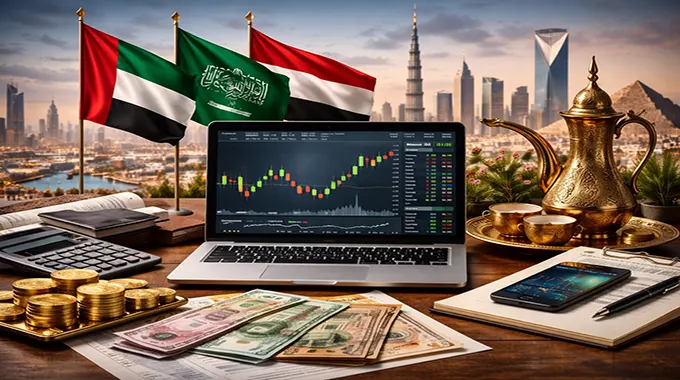
In an increasingly interconnected financial world, traders in the MENA region are looking beyond domestic markets to find opportunities for growth and diversification. One of the instruments gaining attention is Contracts for Difference (CFDs), which allow traders to gain exposure to global assets without owning them outright.

While CFDs offer flexibility and leverage, understanding how to strategically use them is essential for navigating volatile markets and achieving long-term trading objectives.

Understanding CFDs and Their Advantages

Contracts for Difference are derivative instruments that enable traders to speculate on the price movements of underlying assets such as stocks, commodities, indices, and currencies. Unlike traditional investing, CFDs do not involve ownership of the underlying asset. Instead, traders enter an agreement with a broker to exchange the difference in asset value from the time the position is opened to when it is closed.

This structure offers several advantages for MENA traders seeking global exposure. …

Global Supply Chain Shifting and Production Relocation Impacts on Retail Margins

For decades, retail profitability was built upon a straightforward formula: hyper-optimized, single-source global sourcing focused entirely on securing the lowest possible labor costs. Retailers chased efficiency across vast oceans, relying on predictable trade routes and centralized manufacturing hubs to maximize gross margins. Today, that era has definitively closed.

Plagued by geopolitical friction, trade restrictions, and recurring logistical shocks, the retail sector is undergoing a massive structural transformation. Driven by nearshoring, friendshoring, and multi-hub manufacturing diversification, production relocation is no longer just a risk-management checkbox—it is a core determinant of retail survival. However, while shifting production builds long-term supply chain resilience, it introduces complex cost pressures that directly compress retail margins, requiring leaders to fundamentally rethink their economic models.

The Cost Mechanics of Production Relocation

Moving manufacturing out of traditional, low-cost mega-hubs and into alternative regions is an expensive undertaking. Retailers and their manufacturing partners face a dual layer of financial …

Can I Get a World Finance Installment Loan with Bad Credit? Requirements and Process

Facing a financial crunch when your credit score is less than stellar can feel like hitting a brick wall. Traditional big-bank lenders often turn down applicants with imperfect credit histories almost instantly, leaving borrowers searching for viable alternatives during stressful moments.

For decades, consumer installment lenders such as World Finance have specialized in looking beyond a standard three-digit credit score. If you are wondering whether you can secure a loan with a poor credit history, the answer is yes—though approval relies heavily on your overall financial picture, income stability, and ability to repay, alongside specific documentation requirements.

Understanding World Finance and Bad Credit Policies

It is important to distinguish personal installment loans from predatory payday loans. While payday loans often trap borrowers in rolling cycles of triple-digit interest and rapid-repayment demands, installment loans feature fixed monthly payments, predictable schedules, and a definitive end date. Furthermore, reputable installment lenders typically report …