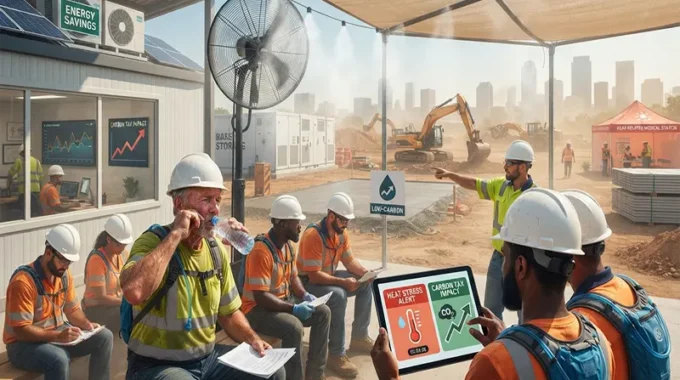
How Extreme Heat Hazards and Carbon Taxes Are Changing Workplace Operations

For generations, corporate operational strategy treated the physical environment as a constant. Offices, warehouses, and factories were designed around stable baseline climates, and energy consumption was viewed purely through the lens of utility costs. Today, that operational certainty has evaporated.

Modern organizations face the convergence of two powerful, escalating forces: accelerating extreme heat hazards that threaten worker safety and labor capacity, and expanding carbon taxes that penalize emissions-heavy facility management. To survive and thrive in this new operating environment, businesses must fundamentally adapt their physical infrastructure, shift work scheduling, and decarbonize their operational footprints.

The Operational Impact of Extreme Heat Hazards

Rising global temperatures and frequent, prolonged heatwaves are no longer just environmental concerns; they are critical workplace safety liabilities that directly impair productivity and human capital.

  • Labor Capacity and Health Risks: As wet-bulb temperatures and ambient heat rise, physical exertion outdoors or in non-climate-controlled facilities (such as warehouses, manufacturing

The Rise of Solo Entrepreneurs Building Profitable Micro-Multinational Businesses

For decades, the traditional definition of a multinational corporation conjured images of towering glass skyscrapers, thousands of desk-bound employees, massive HR departments, and complex international subsidiaries. Building a truly global enterprise required immense capital expenditure and a sprawling organizational chart.

Today, that paradigm has been entirely dismantled. We are witnessing the golden age of the “micro-multinational”—a business operated entirely by a single founder that serves a global customer base, transacts in multiple currencies, and generates millions in revenue without a single traditional employee. Enabled by advanced artificial intelligence, cloud infrastructure, and borderless contractor ecosystems, solo entrepreneurs are rewriting the rules of corporate scale, proving that small teams can achieve unprecedented global reach and profitability.

The Tech Stack Powering the One-Person Global Enterprise

The core driver behind the micro-multinational phenomenon is the staggering evolution of software leverage. Tasks that once required entire departments are now executed seamlessly by automated workflows and …

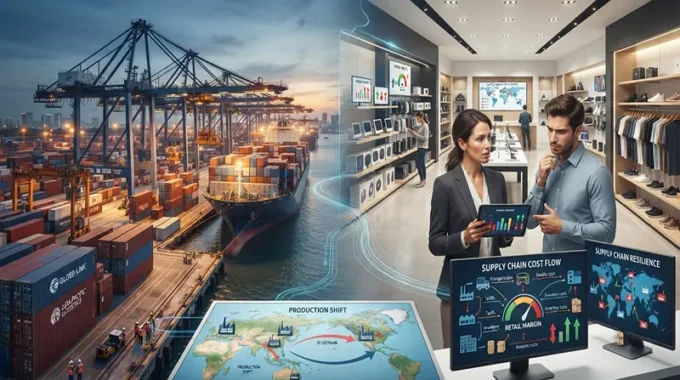
Global Supply Chain Shifting and Production Relocation Impacts on Retail Margins

For decades, retail profitability was built upon a straightforward formula: hyper-optimized, single-source global sourcing focused entirely on securing the lowest possible labor costs. Retailers chased efficiency across vast oceans, relying on predictable trade routes and centralized manufacturing hubs to maximize gross margins. Today, that era has definitively closed.

Plagued by geopolitical friction, trade restrictions, and recurring logistical shocks, the retail sector is undergoing a massive structural transformation. Driven by nearshoring, friendshoring, and multi-hub manufacturing diversification, production relocation is no longer just a risk-management checkbox—it is a core determinant of retail survival. However, while shifting production builds long-term supply chain resilience, it introduces complex cost pressures that directly compress retail margins, requiring leaders to fundamentally rethink their economic models.

The Cost Mechanics of Production Relocation

Moving manufacturing out of traditional, low-cost mega-hubs and into alternative regions is an expensive undertaking. Retailers and their manufacturing partners face a dual layer of financial …

How Mid-Market Companies Are Implementing Enterprise-Wide AI Workflows to Boost Productivity

For the past couple of years, the conversation around artificial intelligence in the workplace has been dominated by individual productivity hacks. Employees across organizations have experimented with standalone chatbots, drafted emails with generative models, and summarized documents on the fly. While these point solutions deliver incremental gains, they represent a fragmented approach to technology.

Today, mid-market organizations are realizing a critical truth: true return on investment does not come from giving every employee a better spellchecker. It comes from embedding intelligence directly into the connective tissue of the business. Moving beyond isolated chat interfaces, forward-thinking mid-market companies are transitioning to integrated, enterprise-wide AI workflows that fundamentally rewire how back-office and customer-facing operations function.

The Evolution: From Ad-Hoc Adoption to Workflow Automation

The early phase of generative AI adoption within the mid-market resembled a digital “Wild West.” Employees experimented with tools independently, raising valid concerns among leadership regarding data privacy, shadow …

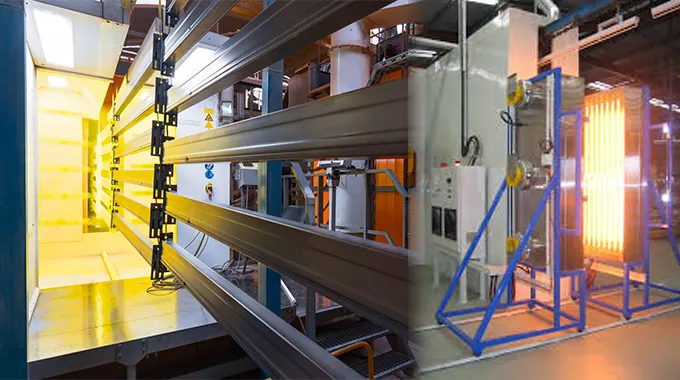
How Does the Shape of a Part Influence Curing in a Powder Coating Oven

Not all parts are created equal, and their shapes can make or break the powder coating process. From complex geometries to variations in thickness, every contour impacts how heat flows and cures the coating. Understanding these subtle influences can unlock better results, no matter how intricate the parts might be. 

Heat Flow Dynamics Around Irregular Part Shapes 

Powder coating ovens work by circulating heated air to evenly cure coatings, but irregularly shaped parts can disrupt this process. Sharp edges, curves, and non-linear surfaces create obstacles for consistent heat flow, causing uneven curing in some cases. These disruptions mean that some areas might overheat while others remain under-cured. 

To counteract these challenges, powder coating ovens rely on strategic airflow systems. However, it’s not just the oven’s design that matters; part placement also plays a significant role. When parts with unusual shapes are positioned improperly, it can further block air circulation, …