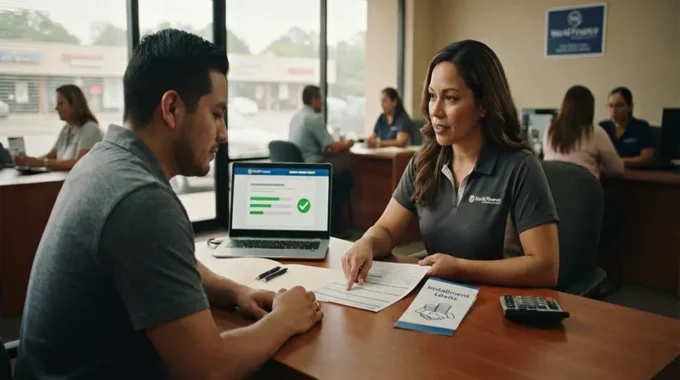
Facing a financial crunch when your credit score is less than stellar can feel like hitting a brick wall. Traditional big-bank lenders often turn down applicants with imperfect credit histories almost instantly, leaving borrowers searching for viable alternatives during stressful moments.
For decades, consumer installment lenders such as World Finance have specialized in looking beyond a standard three-digit credit score. If you are wondering whether you can secure a loan with a poor credit history, the answer is yes—though approval relies heavily on your overall financial picture, income stability, and ability to repay, alongside specific documentation requirements.
Understanding World Finance and Bad Credit Policies
It is important to distinguish personal installment loans from predatory payday loans. While payday loans often trap borrowers in rolling cycles of triple-digit interest and rapid-repayment demands, installment loans feature fixed monthly payments, predictable schedules, and a definitive end date. Furthermore, reputable installment lenders typically report payment history to all three major credit bureaus, offering a pathway to rebuild your credit over time.
When it comes to credit requirements, lenders like World Finance take a holistic view:
- Beyond the Score: Rather than automatically rejecting applications based on a low credit score, underwriters evaluate your complete financial profile.
- Alternative Indicators: They place significant weight on your income stability, employment history, and how well you manage your existing recurring monthly obligations.
- Application Phase: Many lenders allow you to check your options or pre-qualify using a soft inquiry that does not impact your credit score before moving forward with a formal application.
Core Requirements and What Lenders Look For
Because bad-credit installment lenders take on higher risk, they require clear verification of your identity, residency, and ability to make consistent monthly payments. To qualify, you will typically need to meet several baseline requirements and provide specific documentation.
- Income Stability: Lenders want to see a reliable, recurring source of income. This can include traditional employment, self-employment income, or fixed government benefits (such as Social Security or disability), provided it can be verified with bank statements or tax documents.
- Mandatory Documentation: When applying, be prepared to provide:
- A government-issued photo ID (such as a driver’s license or state ID) with a signature.
- Proof of residence (such as a recent utility bill, lease agreement, or mortgage statement).
- Recent proof of income (such as pay stubs, W-2 forms, or bank statements showing steady deposits).
- Your Social Security card or Individual Taxpayer Identification Number (ITIN).
- Loan Amounts: Depending on your state of residence, local regulations, and your financial qualifications, loan amounts typically range from a few hundred dollars up to $10,000 or $12,000.
The Application and Funding Process
The path from application to receiving funds has become increasingly streamlined, combining online accessibility with traditional customer service.
- How to Apply: You can typically start the process online or by phone. Depending on state laws and lender policies, you may need to complete a final verification step or finalize the paperwork at a local branch office.
- Funding Speed: Once your application is reviewed, approved, and finalized, funds can often be disbursed quickly—sometimes via direct deposit, a debit card push, or a physical check issued the same day.
- Understanding the Cost: Bad-credit installment loans carry higher interest rates and Annual Percentage Rates (APRs) than prime loans, reflecting the elevated risk for the lender. It is crucial to review the total cost of borrowing, including any potential origination fees, before signing the agreement.
Smarter Borrowing Practices
Having bad credit does not automatically bar you from securing an installment loan, but preparedness and budgeting are vital to keeping your finances on track.
Before signing a loan agreement, keep these best practices in mind:
- Budget Alignment: Ensure the fixed monthly payment fits comfortably within your monthly budget without forcing you to miss other essential bills.
- Leverage Timely Payments: Use the structured repayment schedule to your advantage by setting up automatic payments, ensuring your on-time history is reported to credit bureaus to help boost your score over time.
- Weigh Alternatives: Always evaluate if there are lower-cost alternatives available—such as negotiating a payment plan with your creditor, utilizing an employer-sponsored advance, or tapping emergency savings—before committing to a high-APR personal loan.